Description
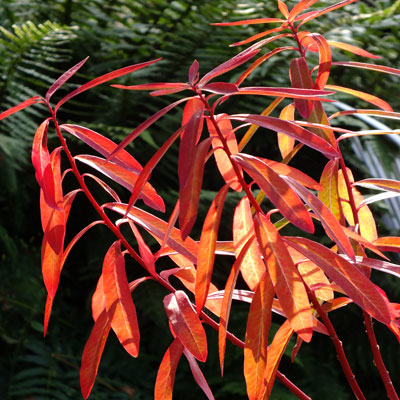
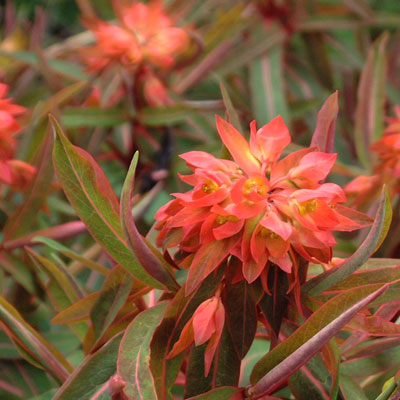
Euphorbia griffithii ‘Dixter’
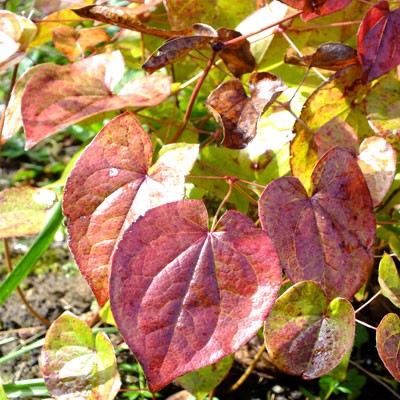
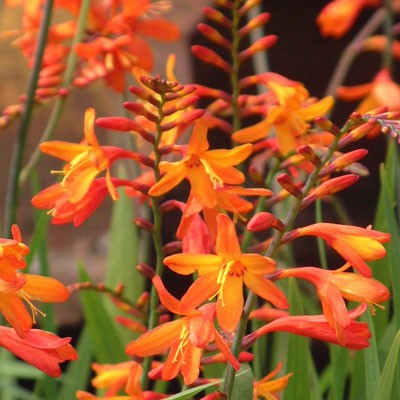
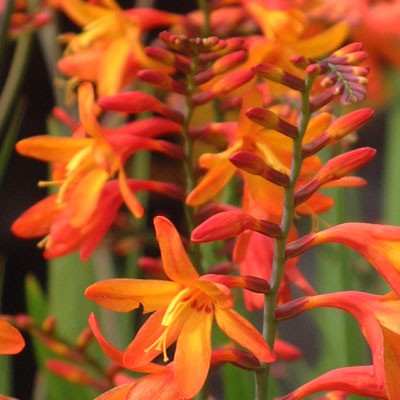
Like it’s cousin, Euphorbia ‘Fireglow’, Euphorbia griffithii ‘Dixter’ has bright orange bracts and a yellow tint to the true flowers to create an effect like glowing coals. What distinguished Euphorbia ‘Dixter’ is that the foliage has a richer tint with more red flush and a burgundy reverse. It has a reputation for spreading less than Euphorbia ‘Fireglow’, which can be a blessing on some lighter soils. In addition the Autumn colour can be worth the asking price on its own. It can vary from a glowing yellow with the leaf margins picked out in scarlet to the most fiery oranges and reds. 60-90cm. Introduced by Christopher Lloyd from seedlings grown by Hilda Davenport-Jones of Washfield Nursery. For a moisture retentive soil in sun. Himalayas
The family acquired its name back at start of the first Millenium. It is said that King Juba II of Mauretania gave the plants their name after his physician Euphorbus. The name spurge is a corruption of the French espurgier, fom the Latin expugare, both of which mean to purge out. This comes from the sap of some species being used as a purgative (not recommended!)
The two factors that bind the genus together are the poisonous milky sap that they possess and the unique form of their flowers.
The milky sap congeals on exposure to air and is an irritant and caustic poison consisting of diterpene esters. The sap can cause irritation by photo-sensitisation and inflammation, especially when in contact with eyes or cuts. It remains an irritant even when dry. The effects can vary greatly by species and season and the person affected. While Euphorbia are generally of no nuisance in the garden it is usually wise to avoid planting them where they will be brushed against frequently, especially by children. When trimming plants care is sometimes wise. We take no precaution when trimming an odd plant, but before trimming a batch we take care to cover exposed skin and wear a face mask – its not so much the odd drop, more the fine mist you create as you cut each stem.
The flowers are quite unique in the plant world, lacking entirely the usual petals. Flowering stems tend to branch 5 times at first and the divides again a variable number of times. At the apex of each branch is a structure called a cyanthium, This consists of 1 to 3 cyanthium leaves which provide the majority of the colour we see – a vibrant acid green or yellow in many species but glowing red in others. Nestled in the centre of these are 3 fused ovaries surrounded by the male parts and the nectaries. The ovaries split explosively when dry, flinging the seeds far and wide.