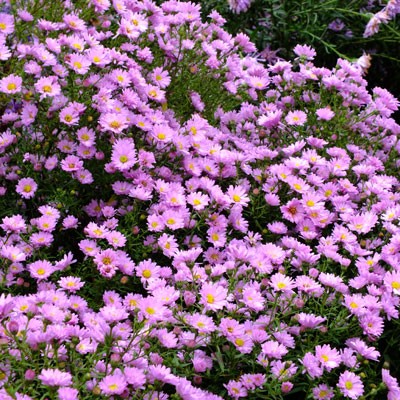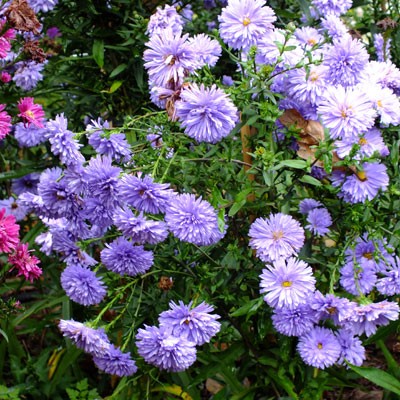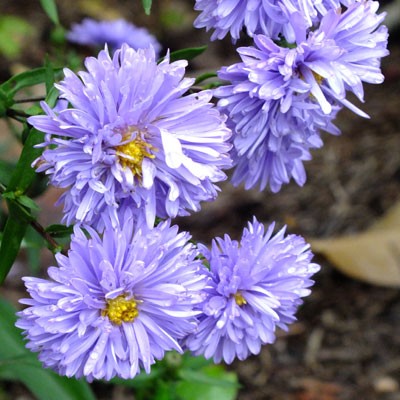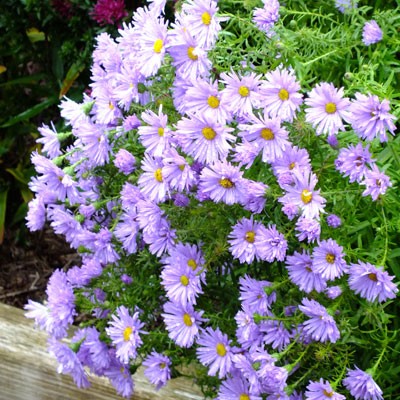
Symphyotrichum

Michaelmas Daisies

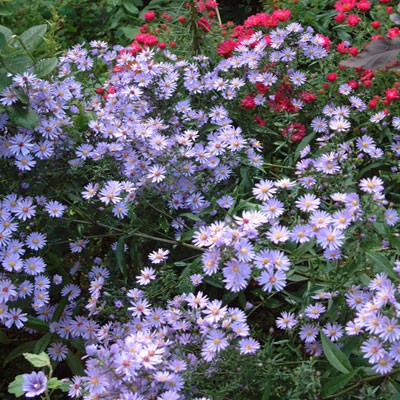
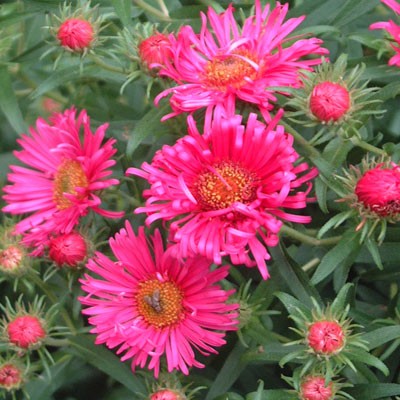
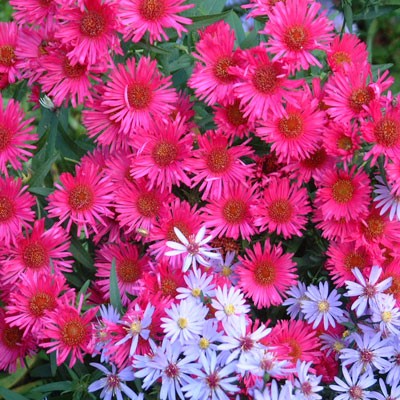
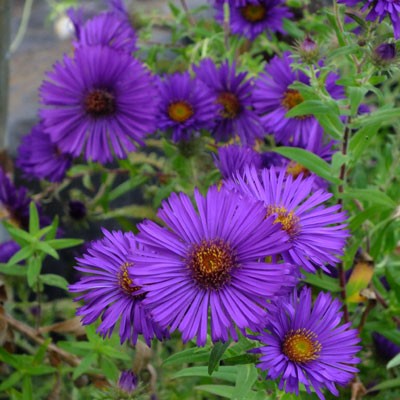
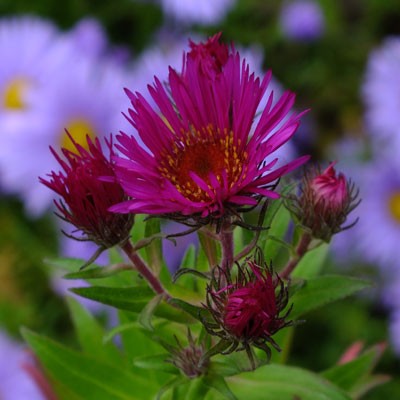
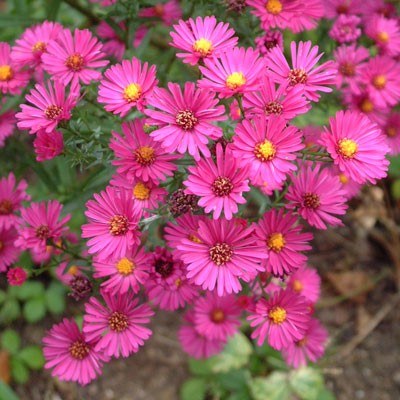
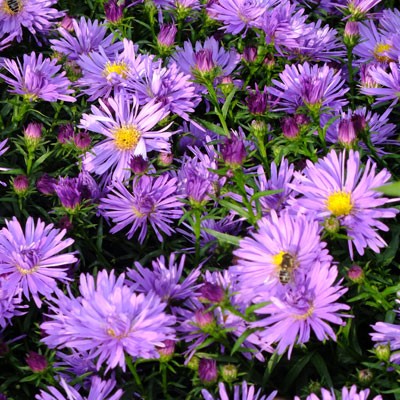
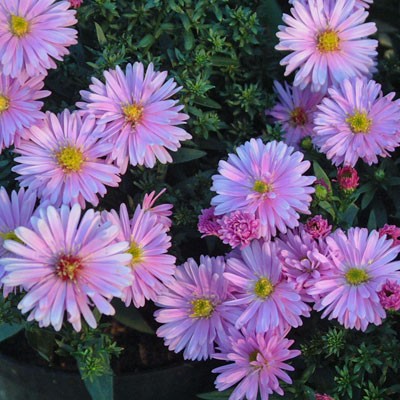
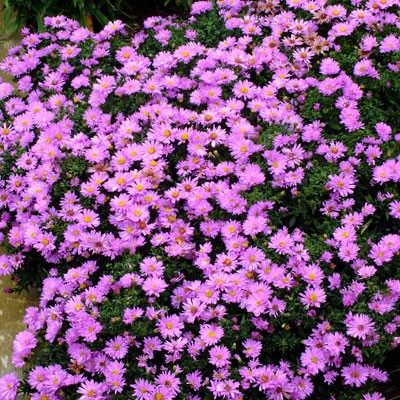
There are Aster species from across the Northern Hemisphere, but the majority come from the Northern United states and Canada. They are reliable stalwarts of the late summer garden, helping to finish off the summer and lead us into autumn with a final hit of colour. Few could deny that A. ‘Alma Potschke’ delivers one of the most eye-wateringly pink experiences of the floral year.

The first Michaelmas daisy to enter Britain came in 1633 with John Tradescant the younger. He brought back A. tradescantii from his travels in Virginia.

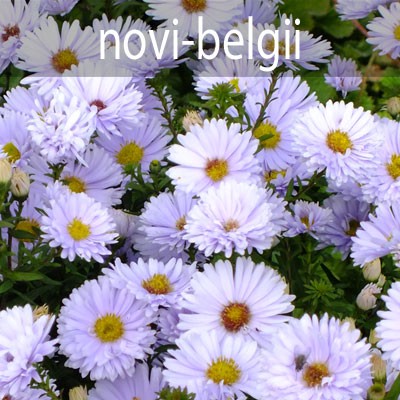
The breeding of Aster novi-belgii began with a Midlands brewer, Ernest Ballard. He noticed a seedling in his Malvern garden that he thought very fine. Subsequently, he submitted it to the RHS for assessment only to be ignored twice. Finally, after persisting, and in the third year of trying A. ‘Beauty of Colwall’ was awarded a First Class Certificate. The Ballard family have since bred and named many fine cultivars .

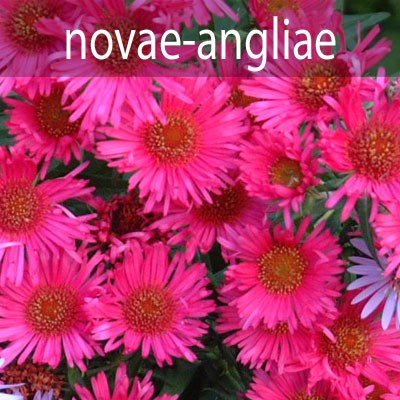
Aster ‘Harringtons Pink’ was the first A.novae-angliae hybrid to arrive in Britain, sent by the Americam who raised it. It is a variety that we still sell today.

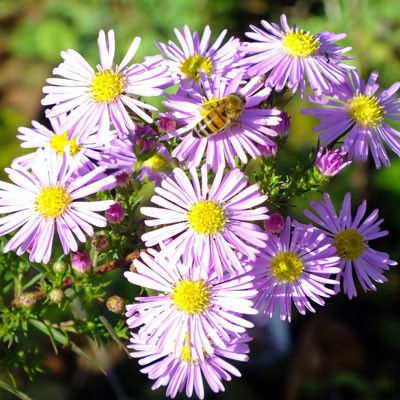
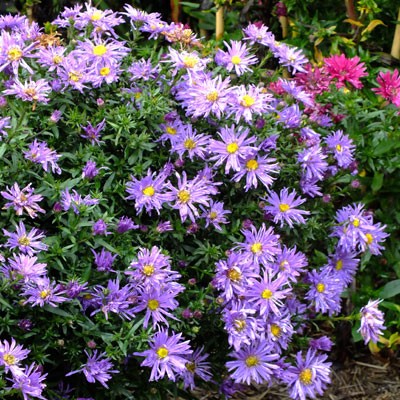
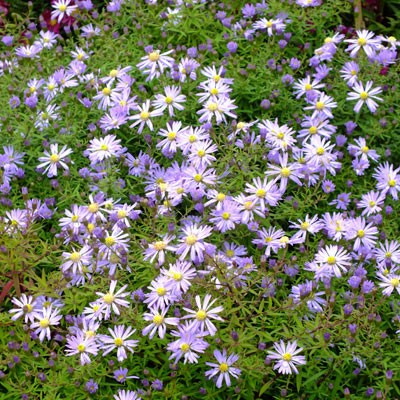
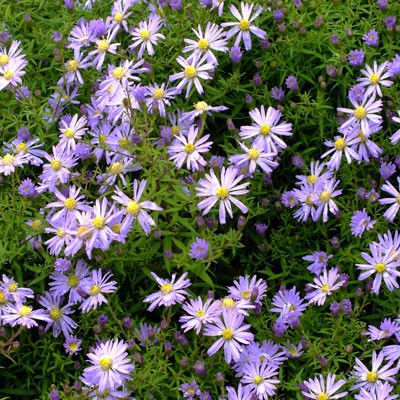
Another important group is the earlier flowering Aster amellus cultivars and the related A. x frikartii. They flower in the second half of the summer on shorter, more open plants. They are an absolute magnet for butterflies and long lasting colour in the border. This is a European and Asian group of plants. A. amellus is a fine species in its own right, but a Swiss breeder called Monsieur Frikart crossed it with A. thomsonii and created the finer Aster x fikartii, of which ‘Monch’ is a splendid example.

Naming

Recently the Botanists have been about Aster with a vengeance and you will now find several of them reclassified under the rather attractive names of Eurybia and Symphyotrichum. I think there should be a prize for anyone attempting to fit Symphyotrichum novae-angliae ‘Andenken an Alma Potschke’ on one 4” pot label. I’ve listed these nomad species under both their new names – for correctness, and also the old ones – for nostalgia and those who don’t like change. Botanists have actually distributed Michaelmas daisies amongst 6 different genera; Aster, Doellingeria, Eurybia, Ionactis, Oclemena, and SymphyotrichumThese are not new names, but re-adoptions of names coined at points during the 19th century to split the Genus Aster, often on geographic grounds.

The Greeks first used the Generic name Aster, It means Star.
Links – Aster Varieties Compared , Botanical Style Photographs

  • Potsize - 1L

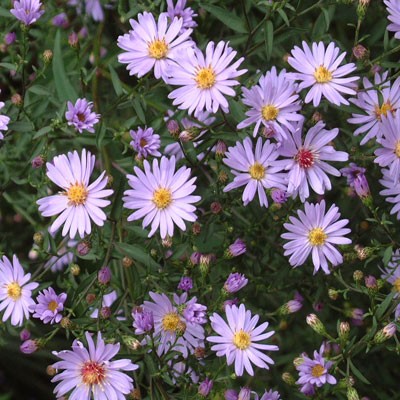
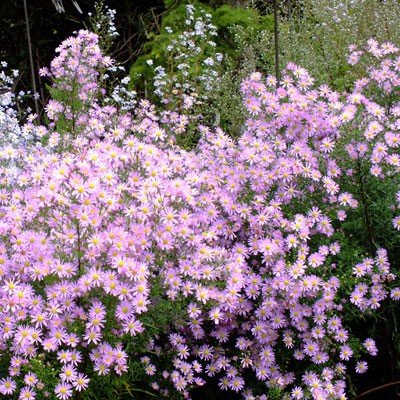
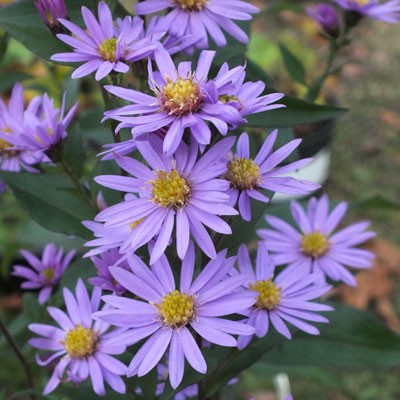
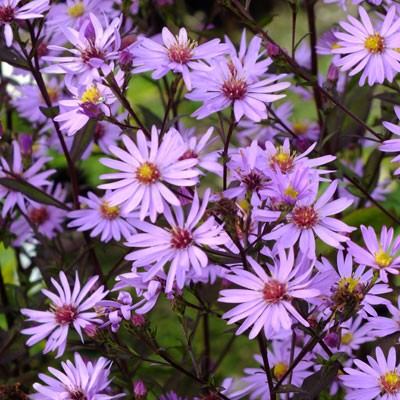
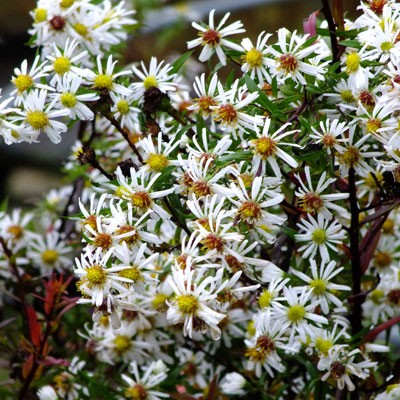
    One of the prettiest autumn flowering Asters with a reputation that lives up to it AGM status. it has to be one of the most fashionable Asters of recent years. Dark wiry stems branch to carry a myriad of lavender-blue flowers in delicate airy sprays. Each 2.5cm flower starts with a small golden eye which gradually changes to a rich burgundy boss. It makes a wonderful site when in full flower in Autumn. Sunny situation. Height 1m (3 feet). The colour and effect that Aster 'Little Carlow' creates is similar to Aster laevis but on a smaller and finer scale. An Aster cordifolius hybrid

    Links

    Aster Varieties Compared

    Botanical Style Photographs

  • Potsize - 1L

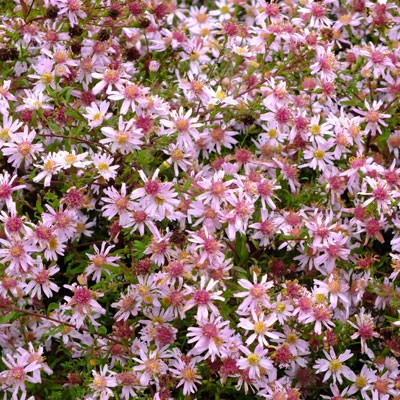
    This is a bushy strong stemmed daisy bearing generous billowing clouds of small clear pink flowers right through September and October. Self supporting to 4 feet and fairly mildew free. It has the flowers, albeit very fine in the petals, of a novi-belgii hybrid with the fine foliage and mildew resistance of Aster pringlei. It is, in some ways, a halfway house between the density of the hybrids and the airiness you get with asters such as 'Photograph' and 'Primorse Path'. Bred by Piet Oudolf and translates as 'Dawn' or 'Morning Light'.

    Links

    Aster Varieties Compared

    Botanical Style Photographs

  • Potsize - 1L

    A lovely tall aster with a very long flowering season. Masses of mid purple starry flowers in the style of Aster 'Little Carlow' and Aster laevis. 180cm

    Links

    Aster Varieties Compared

    Botanical Style Photographs

  • Potsize - 1L

    I've seen this plant described several times as a pale pink form of Aster 'Little Carlow', but is in fact a pink form of Aster laevis, a much larger plant. It shares the lovely dark stems of the species which beautifully accent the pale pink flowers which open from darker buds and gradually fade towards white. The centre conversely starts yellow and ages dark ruby red. Greener in the leaf than the species it is also a little smaller, growing to 1.5m. A relatively new cultivar from France, the name meaning 'The Monastery'. It is also known by the name Aster 'Vasterival'.
    Discount of 25p per plant for quantities of 3 or over

    Links

    Aster Varieties Compared

    Botanical Style Photographs

  • Potsize - 1L

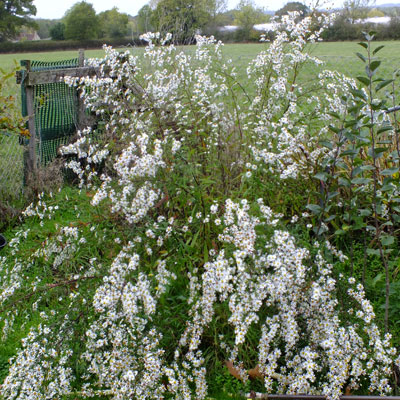
    A very strong growing, tall (1.5-2m) beauty with strong stiff stems which support huge sprays of gorgeous cool, clean white daisies. Freshly opened flowers have green eyes, which adds to the immaculate effect. Flowering late in the year it is at its best in October where it cheers the Autumn garden both visually and as a rich nectar source for the insects to fill up on before Winter. The flowers even withstand the brief Autumn frosts to give a long lasting display. Rarely offered but bomb proof to grow, even the ubiquitous mildew doesn't touch it. The Blue 'Climax' grows at Great Dixter and is described as the trusted old friend that has performed for decades.

    Links

    Aster Varieties Compared

    Botanical Style Photographs

  • Potsize - 1L

    The benefits of this hybrid Michaelmas daisy are a short compact habit combined with an abundance of flowers in a rich lavender-blue that completely cover the plant. Each flower is semi-double with a bright two-toned golden yellow eye. Blends beautifully with the rich tones of Autumn 40cm

    Links

    Aster Varieties Compared

    Botanical Style Photographs

  • Potsize - 1L

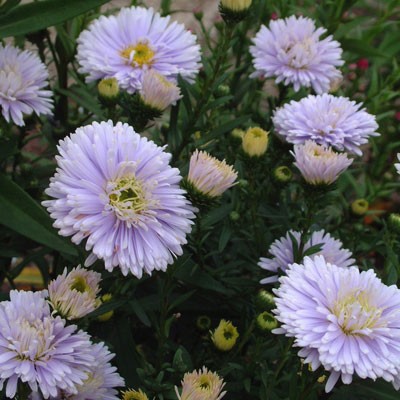
    MICHAELMAS DAISY. What a delightful Aster this is. The flowers are semi-double, but nearly so full as to be approaching double. In colour they are a gorgeous pastel pale-lavender with even paler tips shown off beautifully by the dark foliage. towards the centre of each flower there are a few unruly narrow petals which dance along with the yellow stamens and green eye in a most delightful way. A shorter growing Aster at around 50cm high. Will thrive in sun or part shade. September-October

    Links

    Aster Varieties Compared

    Botanical Style Photographs

  • Potsize - 1L

    The Michaelmas daisies are such a welcome flourish at the end of the year with their glowing profusion of rich tones. This variety is a strong deep crimson semi-double with a bright golden button. 90cm. Quite similar to Winston S. Churchill

    Links

    Aster Varieties Compared

    Botanical Style Photographs

  • Potsize - 1L

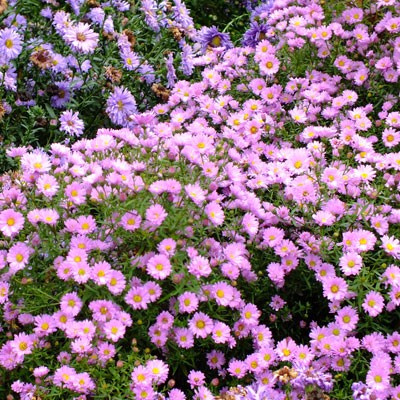
    I recently visited the National Collection of Aster novi-belgii held at the Picton Gardens, and with a collection of around 50 already I was told by him indoors that I didn't need anymore. However this small flowered (2cm wide) mid pink semi-double Aster with dark eyes had me dribbling. A lovely colour and such a mass of blooms. I wasn't surprised that it was the last one left. A beauty that had to go home with me ! 90cm, September to October.
    Discount of 25p per plant for quantities of 3 or over

    Links

    Aster Varieties Compared

    Botanical Style Photographs

  • Potsize - 1L

    This is another of George Chiswell's Asters. Geurney Slade has beautifully shaped double flowers in a rich deep blue. Flowers are produced in September to October at about 1m high. George Chiswell was born in Colwall in Malvern, the home of the famous Ballard Asters. He started his career working in the gardens of Old Colwall House near Malvern for Mrs Raynor-Wood. After WWII he moved on to Midsommer Norton in Somerset and in the 1960's ran his own nursery at the Priory there. Perhaps he had a fondness for the Asters he must have remembered from his youth in the Ballard trial grounds in Malvern, as he began a breeding program of his own, producing a series of Asters, based on the Ballard strains, named after the mining villages of Somerset.
    Discount of 25p per plant for quantities of 3 or over

    Links

    Aster Varieties Compared

    Botanical Style Photographs

  • Potsize - 1L

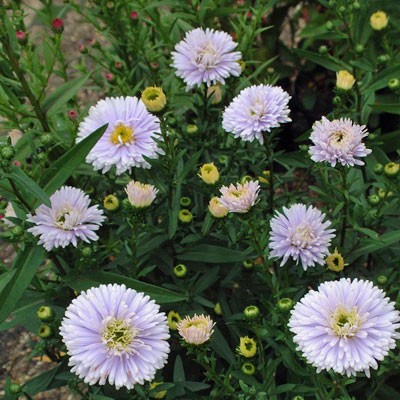
    A beautifully shaped fully double bloom crammed with so many petals it creates a perfect lavender-blue powder-puff a whole 5cm across. 90cm Mid to late September onwards. Sturdy stems. This variety came out of 'Ada Ballard', which was one of the first really double Asters raised by Ernest Ballard, but which lacked the intensity of blue of its parents. It is also known for producing a forest of stems from a relatively compact root run. 'Marie Ballard' was selected just before Ernest died in 1952 and released in 1955. It combines the shapely, completely double flowers on sturdy stems with the intense lavender-blue Ernest was trying to capture.
    Discount of 25p per plant for quantities of 3 or over

    Links

    Aster Varieties Compared

    Botanical Style Photographs

  • Potsize - 1L

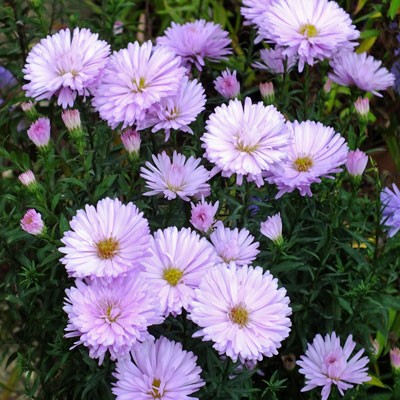
    45cm, compact. Sprays of large, 4cm, semi-double lilac blue daisies adorn this lovely compact, mid-height Aster about 50cm tall.
    Discount of 25p per plant for quantities of 3 or over

    Links

    Aster Varieties Compared

    Botanical Style Photographs

  • Potsize - 1L

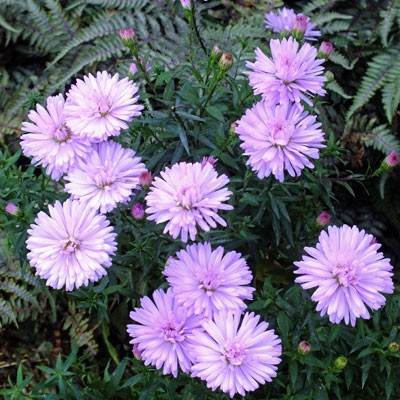
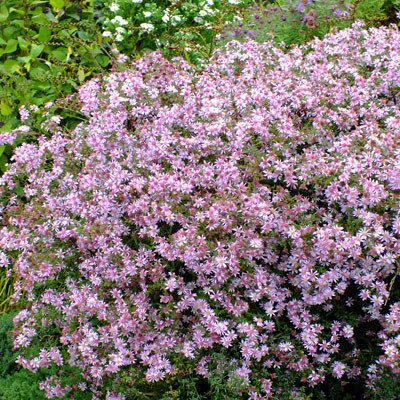
    An exceptionally short Michaelmas daisy which makes up for its size by the punch of its clear pink flowers, produced in great abundance in September. The flowers are a good full semi-double in a sugary lavender-pink that darkens towards the bright golden centre. 20cm. Aster 'Rosenwitchel' creates a really dense mound of closely packed foliage reminiscent of a bun forming alpine. Any good soil in full sun
    Discount of 25p per plant for quantities of 3 or over

    Links

    Aster Varieties Compared

    Botanical Style Photographs

Go to Top