
Species entirely from China
-
Potsize - 1L
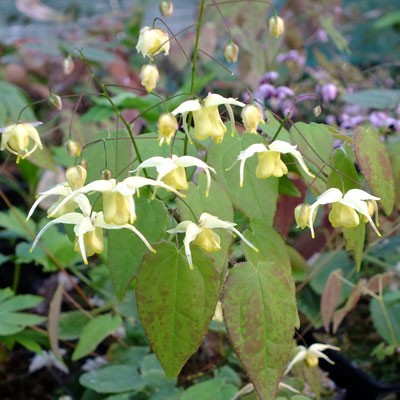
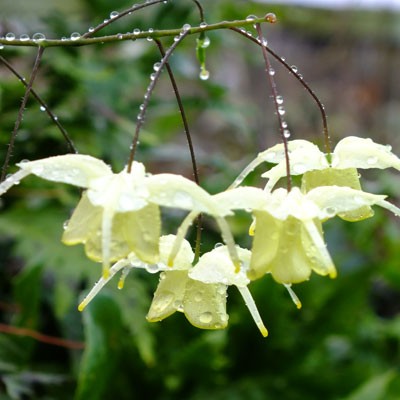
Very well named as the flowers are of just that mix of pale yellow with a tinge of green that characterises that most noxious of elements. However, there the similarity ends as the rest of this plant is lovely. The flowers come in a dense, arching spike with each berberis like flower hanging most gracefully. Towards the end of flowering the outer petals will sometimes stain pink. The effect is quite showy and refined. E.flavum x E.ogisuiLinks
Epimedium Compared
Botanical Style Photographs
-
Potsize - 1L
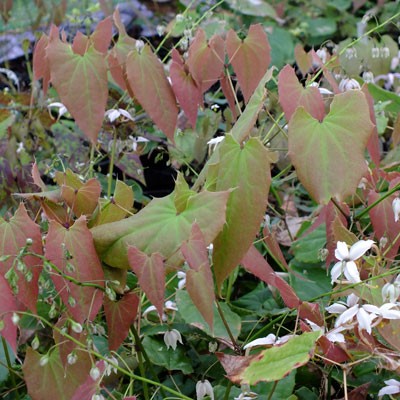
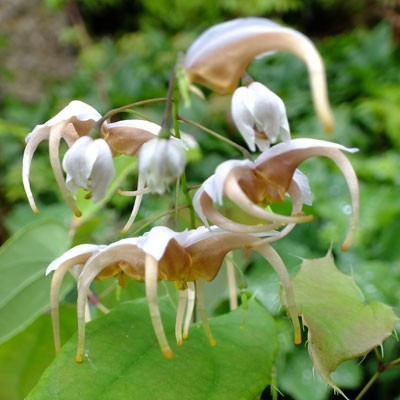
Jean O'Neill has flowers in one of those colours that is quite unique. The flowers are generous in proportions and production, with each being topped by off white sepals, under which curve petals which shade from dunked rich tea biscuit brown to flesh coloured at their curved tips. Young leaves are suffused with a rich tan and they colour a lovely pinky-red in Autumn, still with the darker red speckles. Raised at Spinners by Peter Chapell from Epimedium davidii seed. Possibly a cross with Epimedium acuminatumLinks
Epimedium Compared
Botanical Style Photographs
-
Potsize - 1L
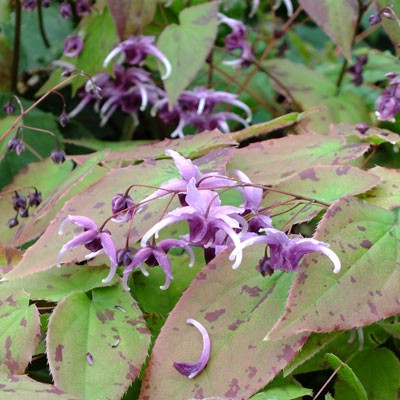
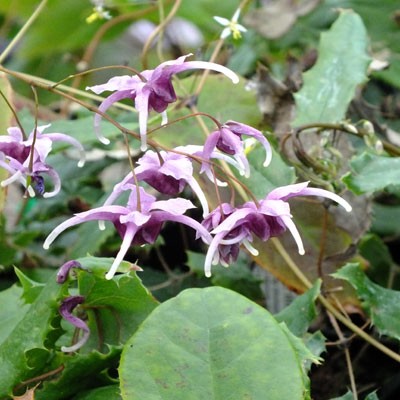
Flowers appear richly coloured in heavy sprays. The sepals are small and lilac, under which curve much larger petal 'claws', deep purple in the centre fading to near white at the curved tips. New leaves are a fresh apple green, staining orangey red towards the margins and then splashed in rich burgundy. Altogether a most attractive cultivar. Raised by Wendy Perry of Bosvigo Garden, Truro from seed of Epimedium acuminatum, with a form of Epimedium grandiflorum as the other parent.Links
Epimedium Compared
Botanical Style Photographs
-
Potsize - 1L
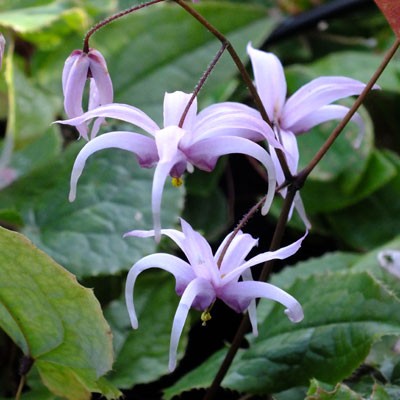
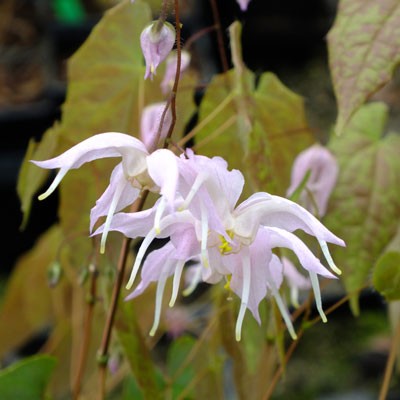
A lot like E.leptorrhizum's larger cousin with flowers in a very similar colour. Each flower is 4cm across with soft pink inner sepals above strongly curved white petals which can develop a purple stain at the mouth. They are a little larger than those of E.leptorrhizum, to my eyes a slightly bluer pink and have a more pronounced colour difference between the petals and inner sepals. They are one of the earliest Epimediums into flower. Leaves emerge with a subtle rusty blotching. Originally collected under the name E.leptorrhizum, but differing in the much shorter runners. Series C - DolichoceraeLinks
Epimedium Compared
Botanical Style Photographs
-
Potsize - 1L
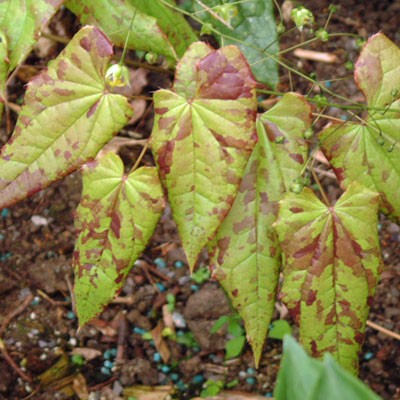
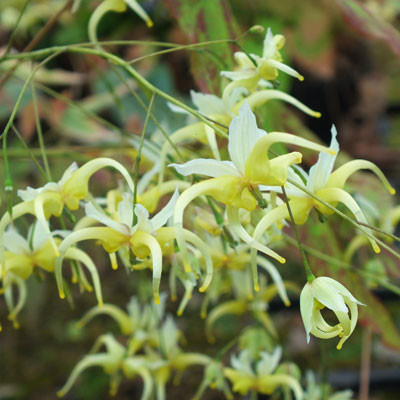
The flowers of this species are typical of the series, being a wide spidery cross in an almost translucent pale lemon yellow. The leaves however are something to behold, being large with three arrow shaped leaflets, apple green with a gorgeous variable overlay of maroon blotching. Two botanical details separate this species from the others in its series. The first is that the sepals are not closely pressed to the petals, but instead arch back to give the flower a little more character. The second, which you can be excused for missing, is that the pollen is green rather than yellow. This feature does however give the species its name. Subgenus Epimedium, Section i, C Series - DolichoceraeLinks
Epimedium Compared
Botanical Style Photographs
-
Potsize - 1L
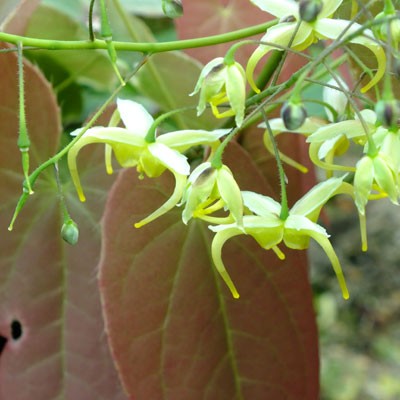
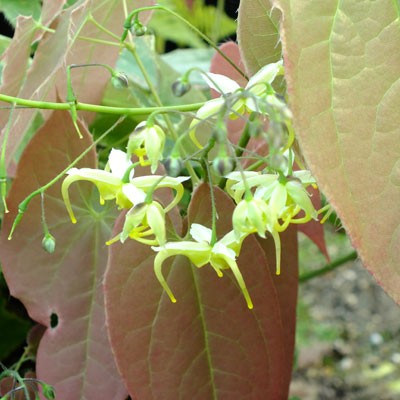
Collected by the great Japanese Epimedium expert Mikinori Ogisu you know that this is going to be something good. And so it is. The new leaves are just the most lovely shades of crimson, providing the perfect foil for the bright lemon yellow flowers. It doesn't sound special when written down, but there is just something about the way that the leaves glow that is so right. The way the petals curve inwards can give the flowers the appearance of so many spiders dangling from the arching stems, but that is to deny their undoubted beauty. The flowers are a strong lemony yellow which look absolutely great against the broad foliage. Winter leaves can colour pale ochre with dark pink veins. From Hubei and Guizhou provinces, China. Named by Professor Stearn. Series C - DolichoceraeLinks
Epimedium Compared
Botanical Style Photographs
-
Potsize - 1L
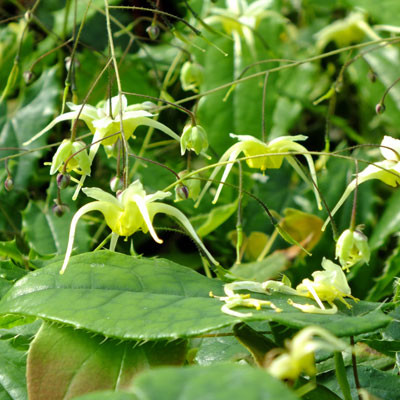
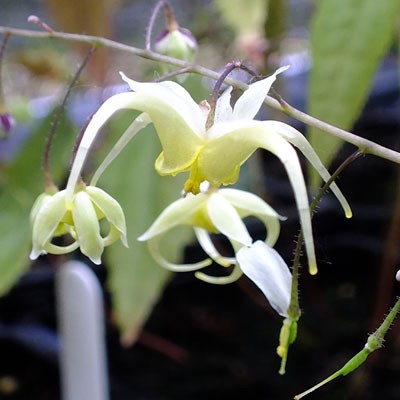
In many ways similar to Epimedium wushanense, but a little smaller (despite being in a different series). The flowers have petals that curve downwards in a shade of pale translucent yellow, stronger towards the centre and on the very tip. They are carried in compound pyramidal inflorescences of up to 30 flowers. The leaves are fresh apple green, paler at first, eventually developing an overlay of red blotching. They are long and narrow with a quite spiky margin. Subgenus Epimedium, Section i, B Series - DavidianaeLinks
Epimedium Compared
Botanical Style Photographs
-
Potsize - 1L
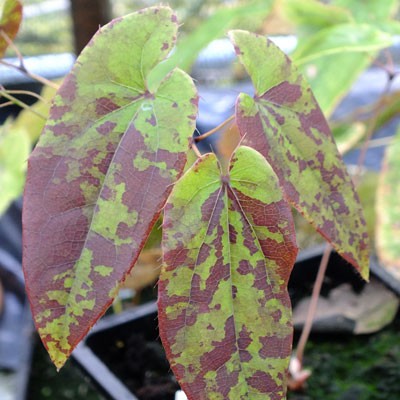
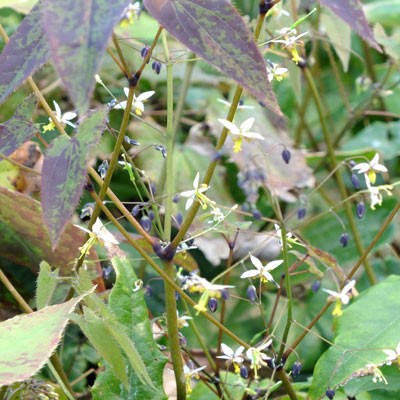
The flowers of this variety are tiny, but more than made up for by the immense profusion in which they are produced creating a cloud of tiny butterflies. Each flower is starry and white, made up mostly of the sepal, with tiny brown incurved petals. The stamens are prominent and yellow so that the overall shape of each flower echoes a dodecatheon. The flowering stems are black, as are the buds which makes a good contrast. Unlike the flowers, the leaves are relatively large, and emerge in a fabulous bright green, heavily overlaid with deep burgundy-red. Subgenus Epimedium, Section i, D Series - BrachyceraeLinks
Epimedium Compared
Botanical Style Photographs
-
Potsize - 1L
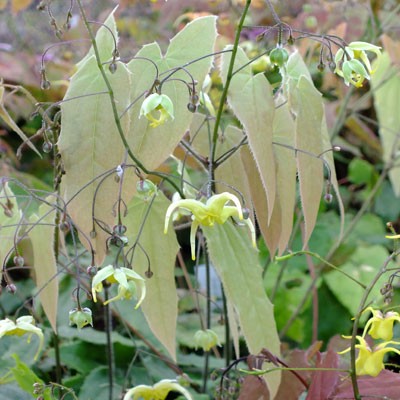
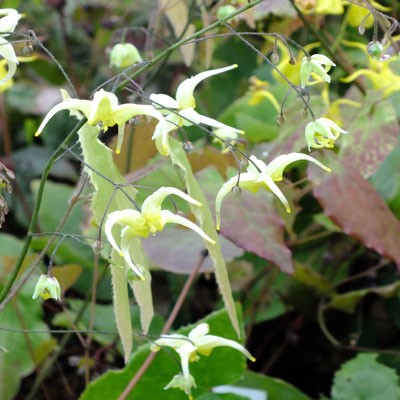
The flowers remind us of an upside down quoit board with the petals curving down at 90 degrees to the plane of the flower in a pale lemony yellow. The sepals are a small pale yellow crown. The flowers are borne on long pedicels, hanging below a long arching dark stem like so many spiders. The foliage is long and narrow, sparsely undulating with a spiny edge. When they first expand, the leaves are an ethereal pastel ochre, subtle, but absolutely lovely pale, shiny yellow-green with bronzed flush. They aren't the striking reds and blotched blacks of some of their cousins, but there is something simply enchanting about them. One of the larger varieties with leaves up to 15cm long and flower stalks that can carry up to 100 flowers. From Wushan county in Sichuan, China. Subgenus Epimedium, Section i, C Series - DolichoceraeLinks
Epimedium Compared
Botanical Style Photographs


