Description
Disporum longistylum ‘Night Heron’ DJHC 739
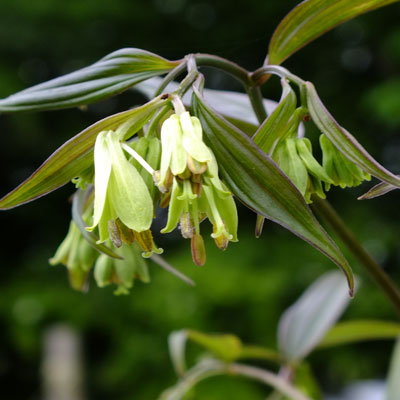
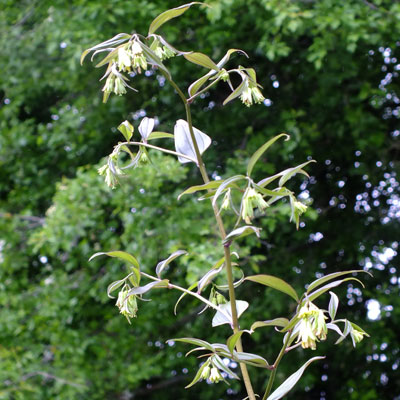
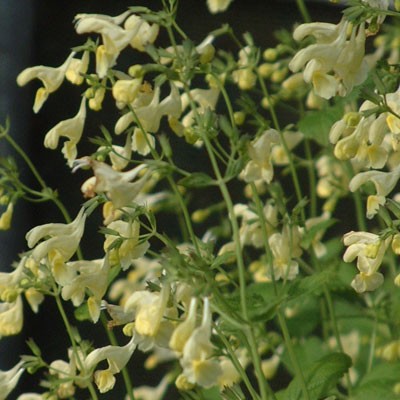
A very special relative of Solomon’s Seal, selected by Dan Hinckley from his travels in China and notable for its luscious deep burgundy young foliage, black stems and exotic greeny cream bells with dangling exerted stamens. Exotic looking, bamboo-like stems are clothed with glossy lanceolate leaves, purple red at first, becoming dark green. In late Spring these terminate at about 90cm in very open clusters of greeny cream bell shaped flowers followed by purple black berries. Slowly spreading by rhizomes in good, humus rich soil in part shade, ideally with morning sun for robust self-supporting growth. Almost evergreen in mild climates or a sheltered spot it is deciduous where temperature fall lower. Night Heron is best as a dramatic vertical accent for choice woodland plantings where its graceful vertical stems lend a new dimension to plantings of ferns, Hostas and Epimediums.
Disporum comes from the Greek ‘di’ = two and ‘spora’ = seed, referring to the two seeded fruits of the Genus. Liliaceae (Colchicaceae)
Several similar woodland Genera used to be found in the Liliaceae but have found themselves reshuffled various times over the last few years as modern genetics gradually unpicks relationships. The similar Polygonatum, Disporum, Disporopsis, Smilacina (Maianthemum) and Uvularia all moved first to the Convallariaceae, but they have been moved on again since. Disporum are in many ways similar to the Solomon’s Seals, Polygonatum and were placed close, but are now in different families; Disporum in the Colchicaceae, Polygonatum in the Asparagaceae. One of the chief distinguishing factors is the fact that Polygonatum produce a fleshy branched rhizome and Diporum also tend to produce flowers terminally and can branch. Disporopsis, which you would think closely related is actually closer to Solomons Seal and is now with it in the Asparagaceae. Uvularia keeps is closeness to Disporum in the Colchicaceae. Smilacina found itself split, Smilacina going to the Colchicaceae and Maianthemum going to the Asparagaceae.



Reviews
There are no reviews yet.