Description
Veronicastrum virginicum ‘Apollo’
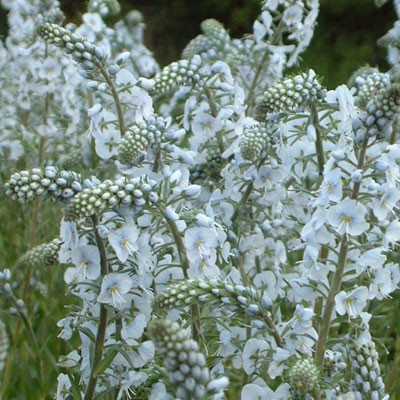
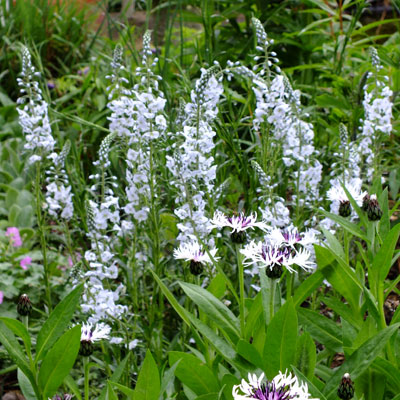
A tall leafy clump forming plant which tapers into foot long blue wands with a string vertical accent, though still with the odd playful bend and twist. The terminal raceme (main spike) is superseded by a whorl of secondary spikes all crammed with tiny flowers that a re a magnet to insects. Ideally grown in full sun in a moisture retentive soil but also effective in light shade to the slight detriment of the strong vertical accent. Heavy flower production, late June- mid August. 150cm tall by 90 wide. One of the varieties that gained a 4* rating in the Chicago Botanic Gardens trial (Apollo, Fascination, Lavendulterm & Pink Glow)
Veronicastrum
There is a long history of medicinal use of this plant. The main use of Culver’s root has been as a purgative and for liver complaints. The common name derives from Dr Culver, a pioneering 18th century physician who promoted its use. Medicinal use can , however, be quite dangerous as the fresh root is a both a violent cathartic and purgative agent, said to produce bloody stools and even abortion. despite this, the Chippewa used a tea made from the root as a blood cleanser. It is notable that the dried root has a less violent effect than the fresh root.
Naming
Veronicastrum shares a common name, Bowman’s Root, with Gillenia, whose roots have also been used in the past as an emetic. I would speculate that this maybe points to a historical confusion of two plants amongst the herbal trade.
There are a great number of common names for this plant, always a good indicator of wide herbal use. Culver’s root, Culver’s-root, Culverphysic, Culver’s physic, Bowman’s root, black root, Eustachya, Leptandra-wurzel. Leptandra virginicum.
Linnaeus first placed Veronicastrum in Veronica where it sat until it was moved into Leptandra and then later Veronicastrum. The name Veronicastrum, therefore, refers back to this similarity.



Reviews
There are no reviews yet.